Barber Insights
Tough cut: how the hairdressing apprenticeship works
· Updated: · 5 min read
They’ve done it: Marios and Jesco successfully completed their hairdressing apprenticeships in January. Anyone who knows them from their many visits to the salons won’t be surprised – but what does an apprenticeship in this field actually involve? We spoke to the former apprentices about trust, chemistry and their goals.
Three models stood between the apprentices and their qualifications at the end of their hairdressing training. One last chance to get stuck in and work on two female and one male model in the practical exam – cutting hair, putting it up, colouring the roots, styling, blow-drying, preparing suitable clothing and make-up – and then it was done. After three years, Marios and Jesco passed their final exam with flying colours and can now officially call themselves hairdressers.
Although there was a certain amount of nervousness, the two Eric:Barbier journeymen approached the final hurdle with optimism. And with good reason: whilst they met many trainees at vocational college whose daily routine consisted entirely of sweeping and watching, Marios and Jesco were able to demonstrate their talent from an early stage. To begin with, they had to practise on models: “Anthony said to me during my work placement before the apprenticeship: ‘I want to see if you’ve got what it takes’,” recalls Jesco of his first attempts. Clearly, the boss was satisfied with his early impressions.
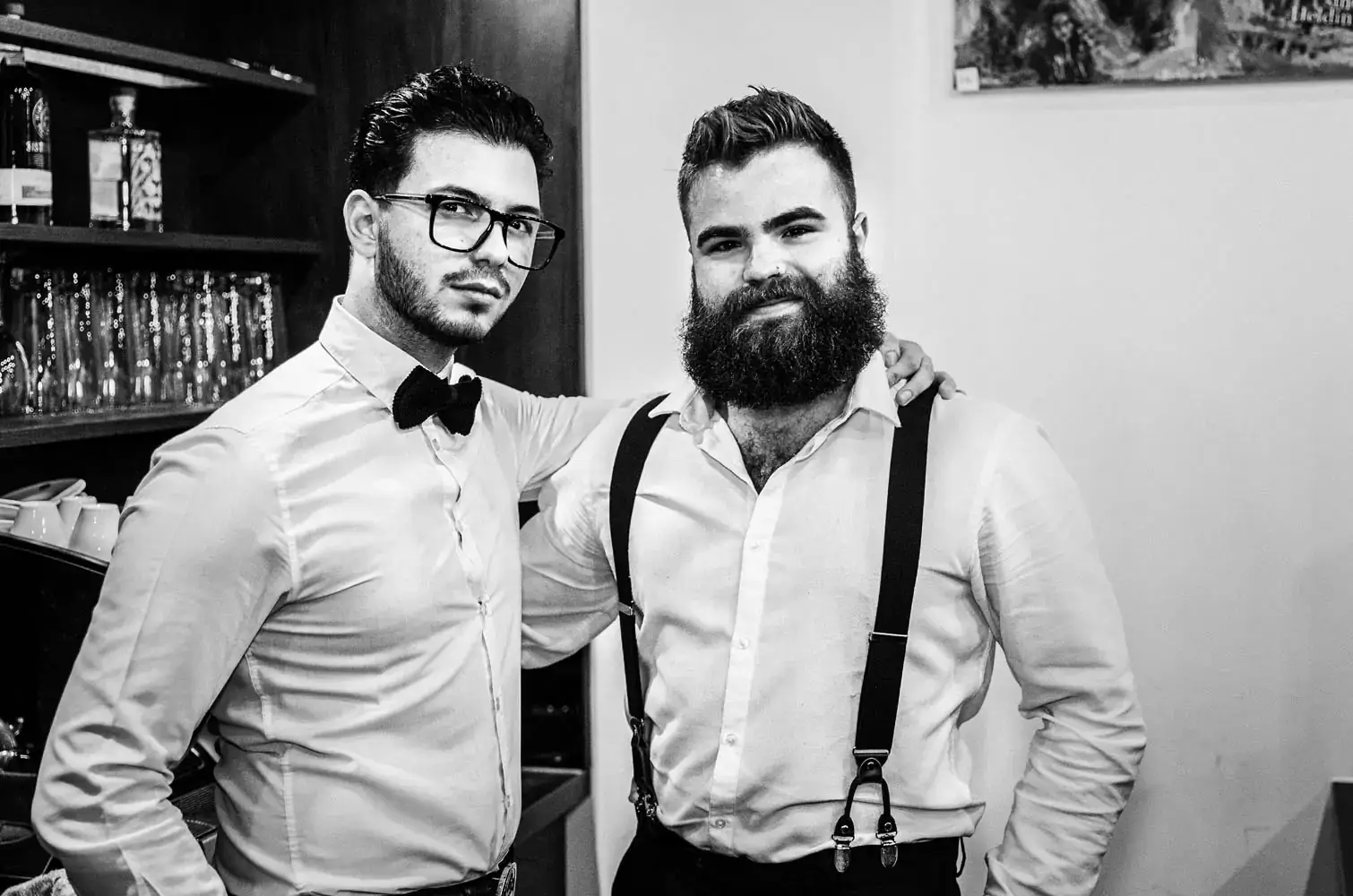
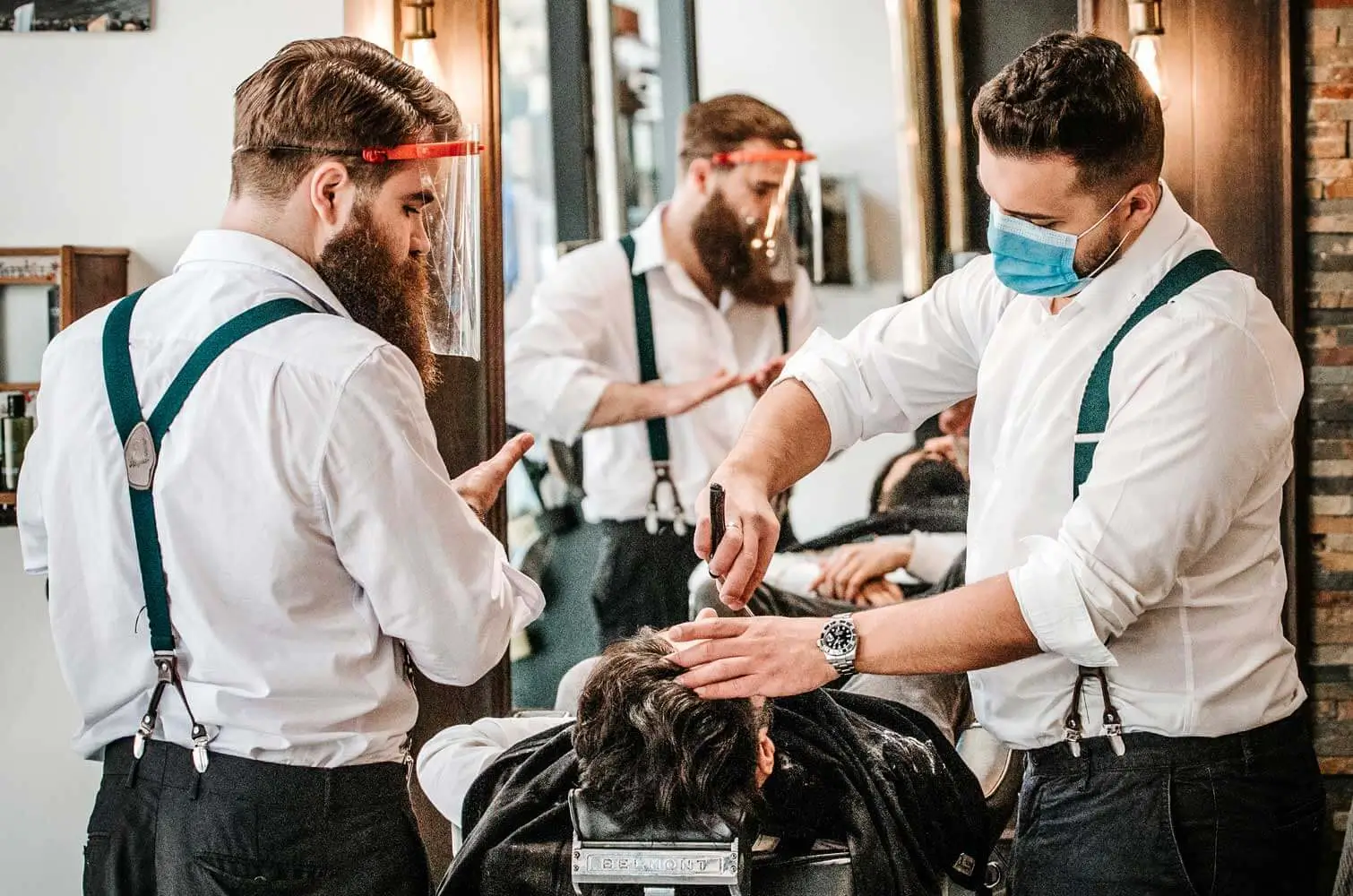 Almost at the same time, Jesco, a native of the Münsterland region and whisky fan, walked through the doors of Eric:Barbier. After training as a distiller and going through a difficult period in his personal life, he made a fresh start in Hamburg. “I really wanted to do something creative and had been looking into barbershops. So I just popped in and asked Ramona about an internship.” Anthony offered him an internship too – and Jesco seized the opportunity. “It was immediately clear that Mario and I would be doing the hairdressing apprenticeship together,” recalls the bearded barber. Since then, colleagues have become friends, and the two of them do a lot together in their free time.


Three out of 23: many drop out of hairdressing training
However, alongside a certain talent for handling barber’s tools, it was the hard facts that counted most at vocational college: each year of their training, they learnt the most important basics of their profession in two six-week blocks. From theoretical knowledge of employment law to the complex chemical processes involved in dyeing, they also examined the structure of skin and hair down to the smallest detail in their lessons. “Many had imagined hairdressing training to be easier. In our class, out of 23 people, only three saw it through,” says Marios. In addition to the demanding academic content, according to Marios and Jesco, poor pay and a lack of trust in their salons were also reasons why many of their classmates dropped out. “It was different for us. Anthony trusted us straight away and gave us tasks straight away,” explains Jesco. The pair repaid this with a thirst for knowledge and skill: “During the training, you spend a lot of time looking over your colleagues’ shoulders and learning directly from their experience. I observed Anthony and Behar particularly closely,” says Marios. “The training requires a lot of logical thinking so that you understand why the hair or beard is cut using a specific technique,” adds Jesco.By chance at Eric:Barbier
Just a few years ago, neither Marios nor Jesco would have dreamed that they would be doing a hairdressing apprenticeship at Eric:Barbier. Marios had just dropped out of his apprenticeship as an automotive mechatronics technician and was looking for an alternative that would suit him better. “I’ve known the salon on Ballindamm all my life; my father was a close friend of the original founder, Erik,” he explains. “As I’ve always enjoyed going to the hairdresser’s and I’m very open-minded, I simply asked if I could do an apprenticeship here.” Managing Director Anthony initially offered him an internship and, in the meantime, obtained his training certificate to make the apprenticeship possible.
Almost at the same time, Jesco, a native of the Münsterland region and whisky fan, walked through the doors of Eric:Barbier. After training as a distiller and going through a difficult period in his personal life, he made a fresh start in Hamburg. “I really wanted to do something creative and had been looking into barbershops. So I just popped in and asked Ramona about an internship.” Anthony offered him an internship too – and Jesco seized the opportunity. “It was immediately clear that Mario and I would be doing the hairdressing apprenticeship together,” recalls the bearded barber. Since then, colleagues have become friends, and the two of them do a lot together in their free time.
First experiences with clients
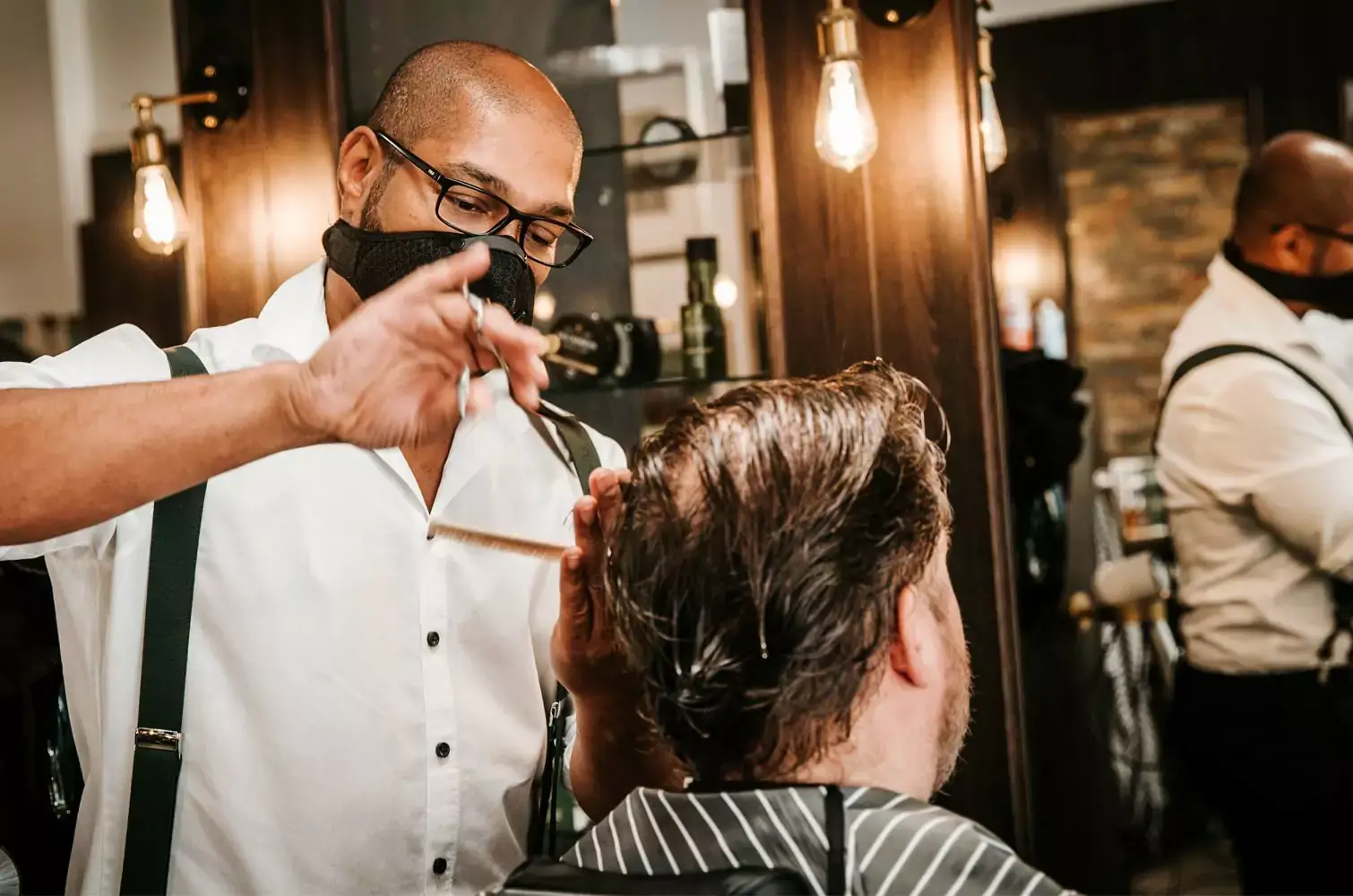
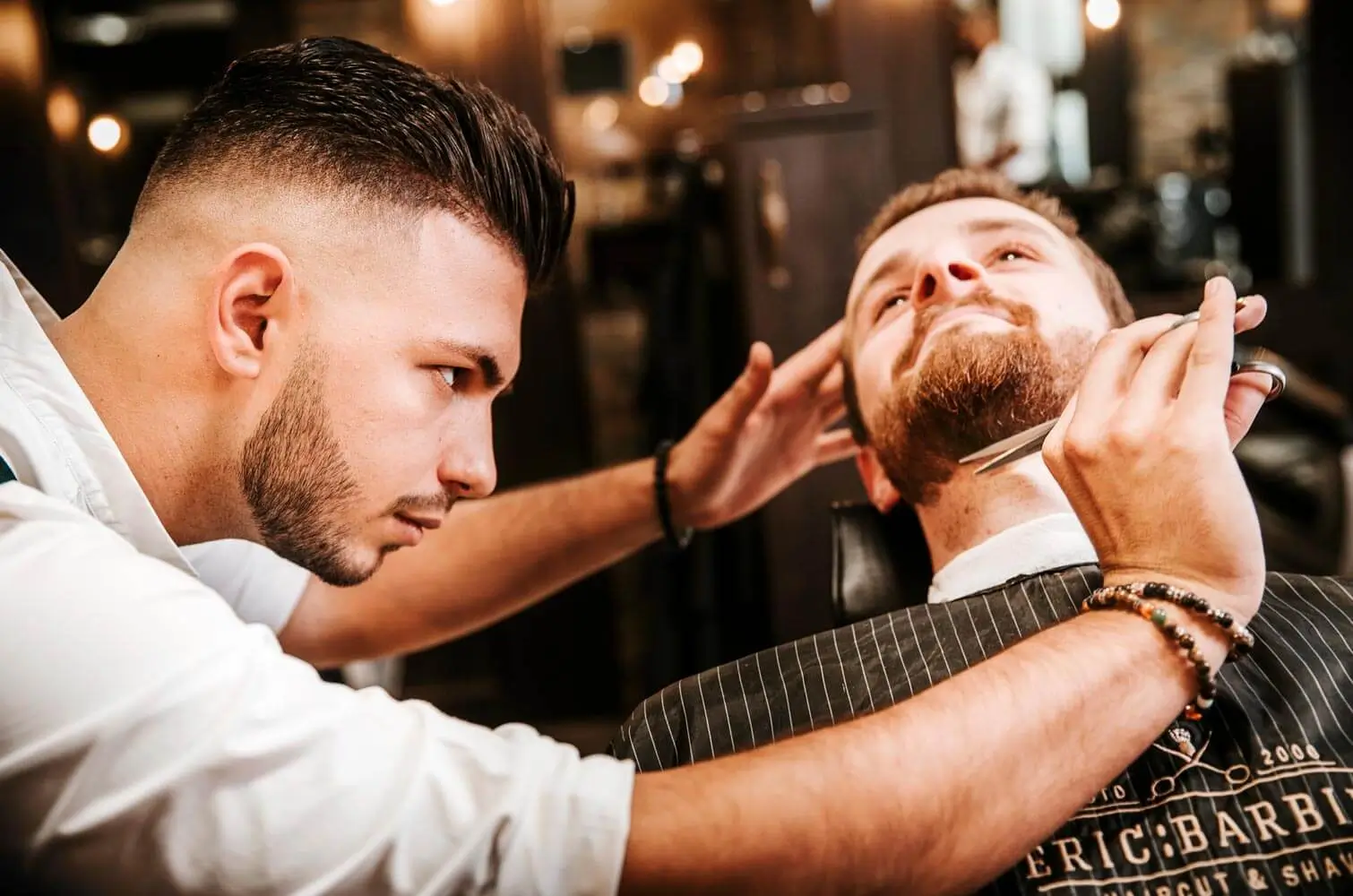
Although the hairdressing training initially involved observing and styling models, the trainees were allowed to work with scissors and razors from an early stage. By their second year of training, Marios and Jesco were already taking on their first clients and were able to develop their own style. “I’d describe mine as a mix of Behar’s very structured approach with his tapered fades and Anthony’s individual style – he’s a master with a comb and scissors,” says Marios. “I’m very meticulous and prefer doing model haircuts where every single hair has to sit perfectly.” Jesco drew inspiration for his own style not only from the approach of Anthony and HafenCity salon manager Behar, but also from René: “Watching Anthony can be quite demanding at times, as he has developed his very own technique. Behar works very precisely, as does René – he cuts hair in a very classic style. I’d describe my own style as the traditional gentleman’s look with a sharp parting, like Frank Sinatra or the actors in the TV series Peaky Blinders. But of course I can also cut more modern styles,” says Jesco.