
Barber Insights
Hairy proof of faith: what connects the beard and religion
· Updated: · 4 min read
A quick guide to small talk: never bring up religion! Yet different faiths don’t just present pitfalls; they also offer fascinating insights into the culture and history of the person you’re talking to. The fact that beards and religion are often closely linked, in our view, is the perfect invitation for beard-wearers to get into a proper chat. Here’s a brief guide to facial hair across the world’s religions.
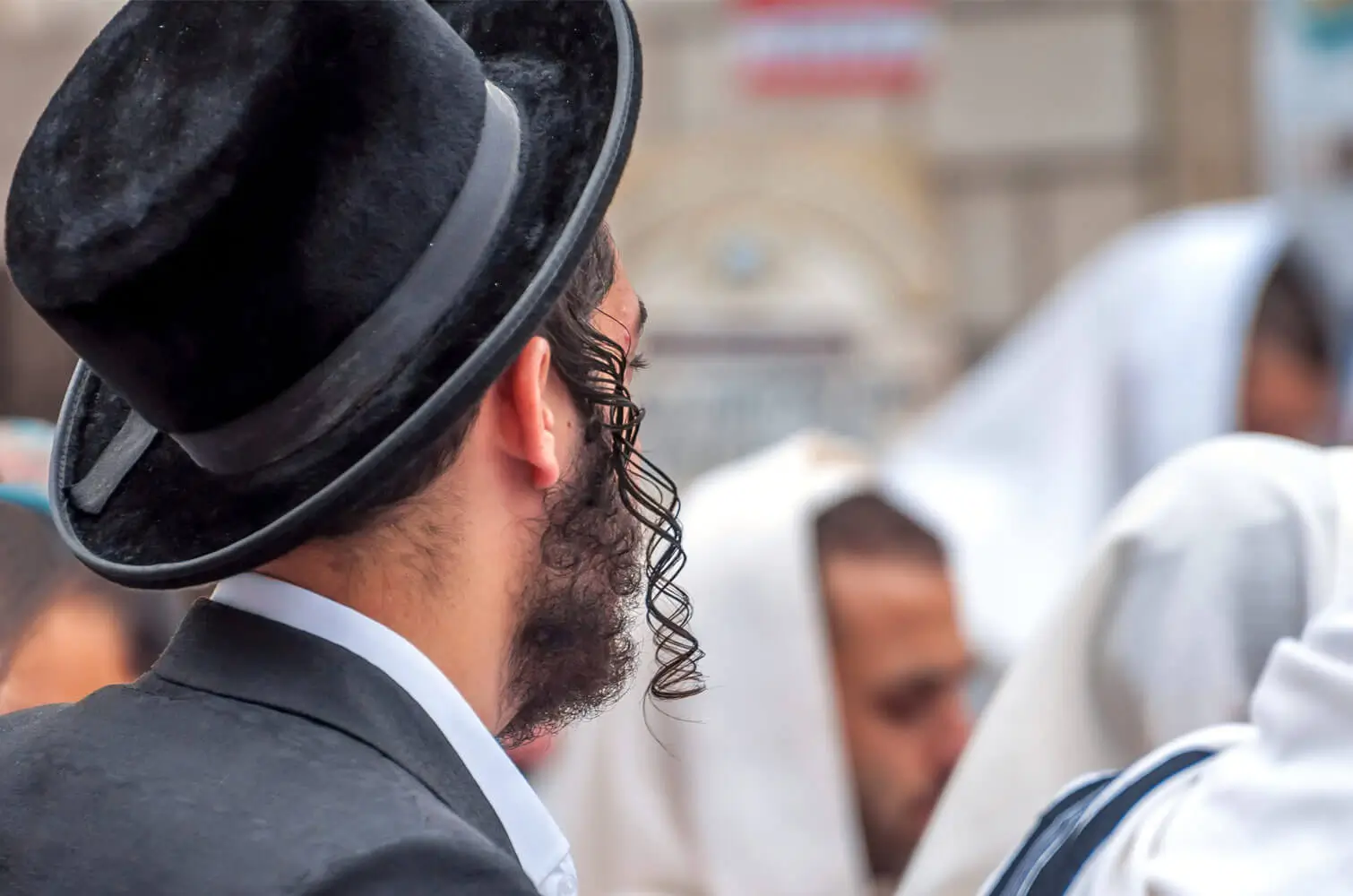


Here, beards and religion form a single entity
In a whole range of faiths, beards and religion are closely intertwined. Sikhs display their ‘kesh’ – their respect for the will of God – through their long beards. This is just as much a hallmark of their faith as wearing a turban, which also adds a distinctive visual touch. Long hair and beards are also characteristic of the Rastafarians, who have their roots in Christianity. As a sign of their connection to God and nature, they let their hair grow and sport distinctive dreadlocks. Also well-known are the so-called ‘peyot’, the side locks worn by Jewish rabbis and believers (on the left in the picture). The Torah forbids cutting the hair below the temples. But why? According to one theory, this is a deliberate way of emphasising the difference between the front and back of the head – a distinction that animals do not possess. If beards and hair are to be trimmed, this must not be done with a knife, but only with scissors. This is why observant Jews use only kosher razors, which operate on the principle of scissors. Muslims follow the words of their Prophet Muhammad. Whilst there are no references to wearing a beard in the Quran itself, there is a passage in the ‘Hadith’ – the recorded sayings and deeds of Muhammad – concerning body hair. Behar, the salon manager at HafenCity, is himself a practising Muslim and understands the significance: ‘We place great importance on the beard being well-groomed – just like the rest of the body. It is a gift from God that must not be harmed. That is why it is also required to keep the moustache short, as otherwise men look unkempt and could harbour bacteria. So it is primarily a matter of hygiene.” There are differing opinions on the “correct” length of hair on the head and beard, and a lively debate among scholars.
No beard for religious reasons
For young Buddhist monks, however, growing a beard is out of the question. At least every two weeks, they shave their heads and faces – a sign of renouncing beauty and of complete devotion on the path to enlightenment. According to tradition, for the founder of the religion, Siddhartha Gautama, shaving was one of the first acts undertaken to discover the true nature of human happiness. Following this maxim, monks still remove their hair with the utmost thoroughness today. The only exception is grey hair, which must neither be dyed nor plucked: it symbolises maturity and transience, which hold great significance in Buddhism. Devout Hindus grow up surrounded by many rituals in which the hair is cut. For instance, during the ‘Chudakarana’ or ‘Mundana’ ceremony, children receive their first haircut and, according to tradition, shed the bad habits of past lives along with their locks. At the ‘Kumbh Mela’, the largest Hindu festival, shaving the head often marks the beginning of the pilgrims’ bath. In the world’s third-largest religion, hair is regarded as an ornament, whereas its removal symbolises humility and devotion to the deities of Hinduism.
Indecisive Christians
If it were up to Saint Augustine, a beard would be an indispensable part of a man’s appearance. As early as the fifth century, the bishop described facial hair as a sign of courage and strength. Many of his successors, however, took a different view: various British archbishops forbade the wearing of beards or even had bearded parishioners excommunicated. Among the Amish religious community, which is widespread in the USA, married men are required to wear a goatee. Moustaches, however, are on the ‘Amish Index’ and are not tolerated by the peace-loving believers, as moustaches were frequently seen on soldiers. Just how significant the symbolic power of the beard is among the Amish is demonstrated by the fact that accidentally trimming the hair is considered a hate crime. As you can see, beards and religion have more in common than one might often think. So why not impress everyone with your new knowledge the next time you’re making small talk? If you’re looking for even more background knowledge on stylish facial hair, our tips will turn you into a real beard expert!Personal advice at the barbershop
Our barbers in Hamburg are happy to advise you personally – whether it's beard care, shaving or the right styling.
Ballindamm 36, Hamburg City Centre
|
Überseeboulevard 2, HafenCity
|
Davidstraße 23, St. Pauli