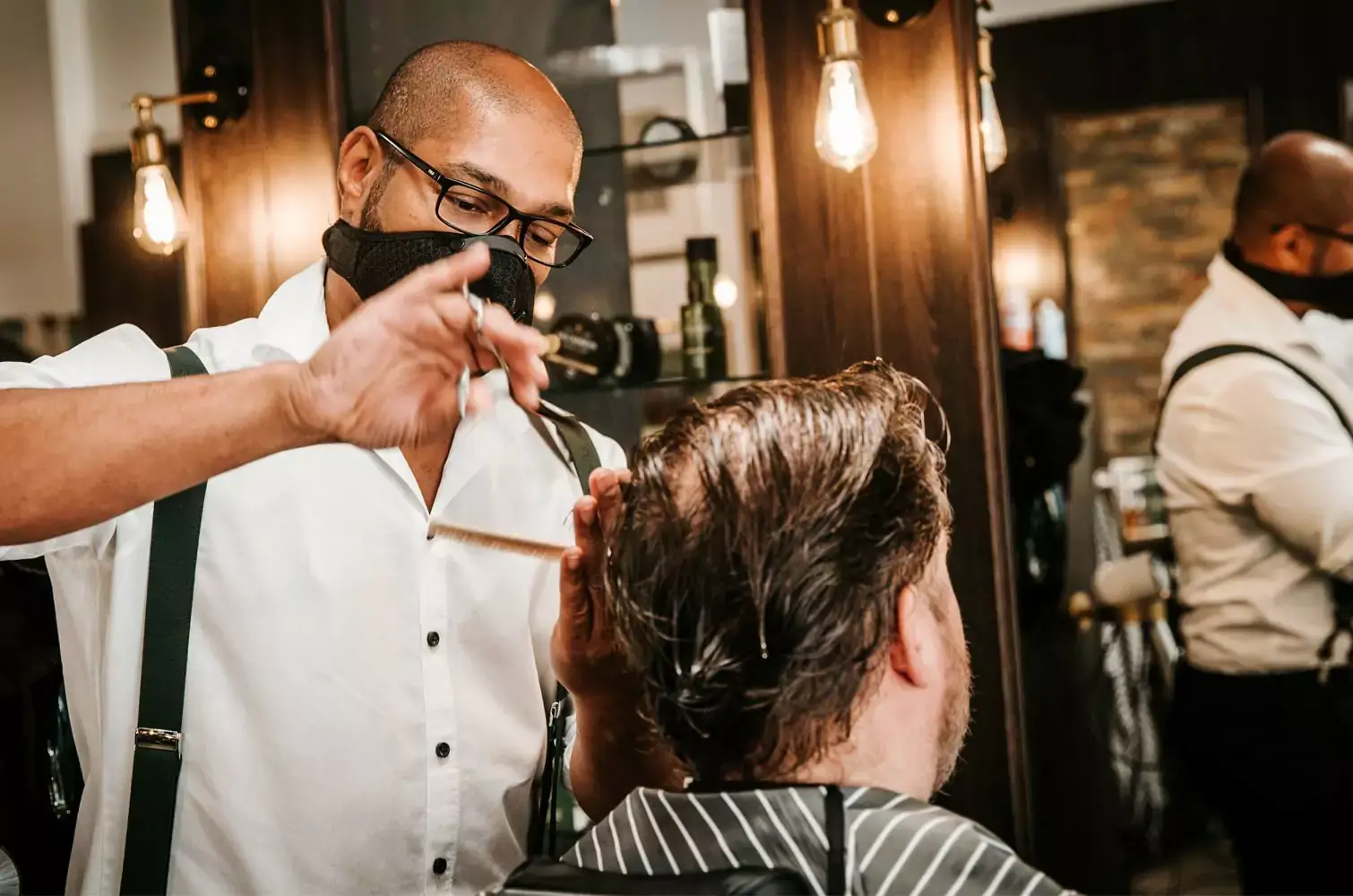
Burnt out - how after shave works today
· Updated: · 3 min read
After shaving, aftershave has to sting the skin – that’s the mantra of men all over the world. For a long time, that actually made sense. But does that unpleasant sensation really still have to be part of the routine today? We take a closer look at this grooming product.

Why does aftershave sting?
It’s certainly not because men were tougher in the past than they are today – I can’t imagine our grandfathers particularly enjoyed the sensation of applying aftershave to their freshly shaved skin. Rather, it is a means to an end: most products contain alcohol, which has a disinfectant and antibacterial effect. That sounds logical; after all, the top layer of skin is stressed during shaving. Without a follow-up treatment, inflammation or razor burn could occur.
The alcohol problem
So, why don’t we just stick with the traditional solution? The reason lies in the alcohol: this strips the skin of moisture, causing it to become reddened and to form a protective layer much faster than normal. This thin layer may be very delicate in comparison, but it is strong enough to trap the stubble that immediately starts to grow back. As a result, the hairs often grow back into the skin, leading to even more irritating problems such as spots, inflammation and blackheads.
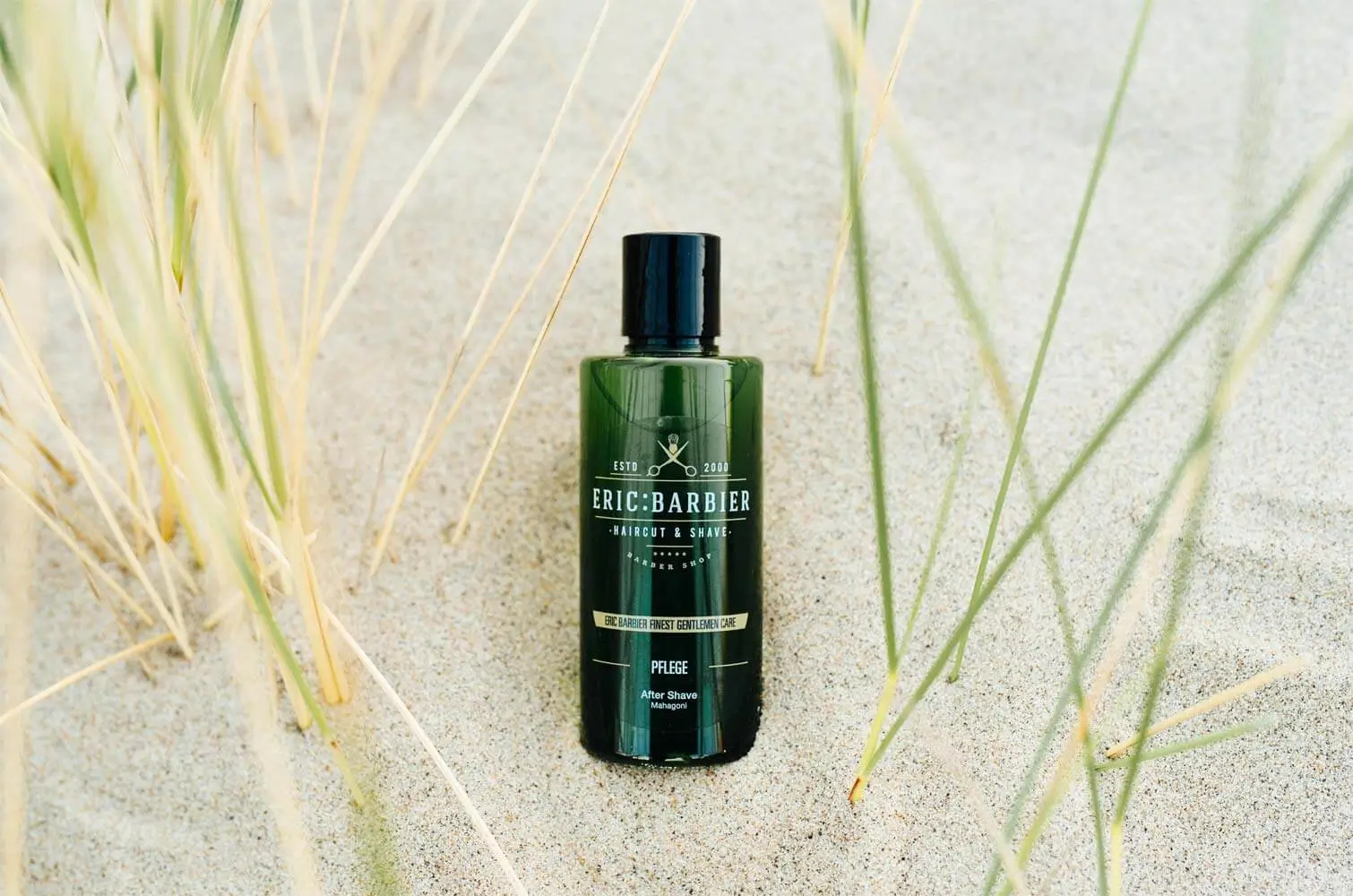
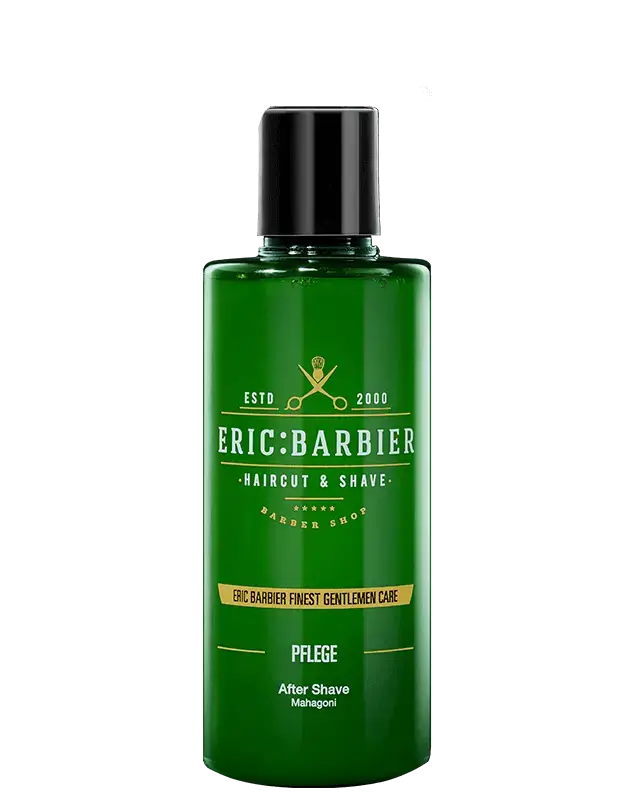
We took a different approach when developing the Eric:Barbier aftershave. We have deliberately omitted alcohol and give men exactly what they need: plenty of moisture. It has the same pH level as the skin, which means it disinfects naturally and avoids the familiar stinging sensation, whilst high-quality oils from argan fruit, eucalyptus leaves, lavender flowers and tea tree plants also have a cleansing effect and reduce skin tightness. I particularly recommend the mild, mahogany-scented aftershave to customers with sensitive skin; it’s the one we always use in our salons on Jungfernstieg and Überseeboulevard.
Shaken, not stirred
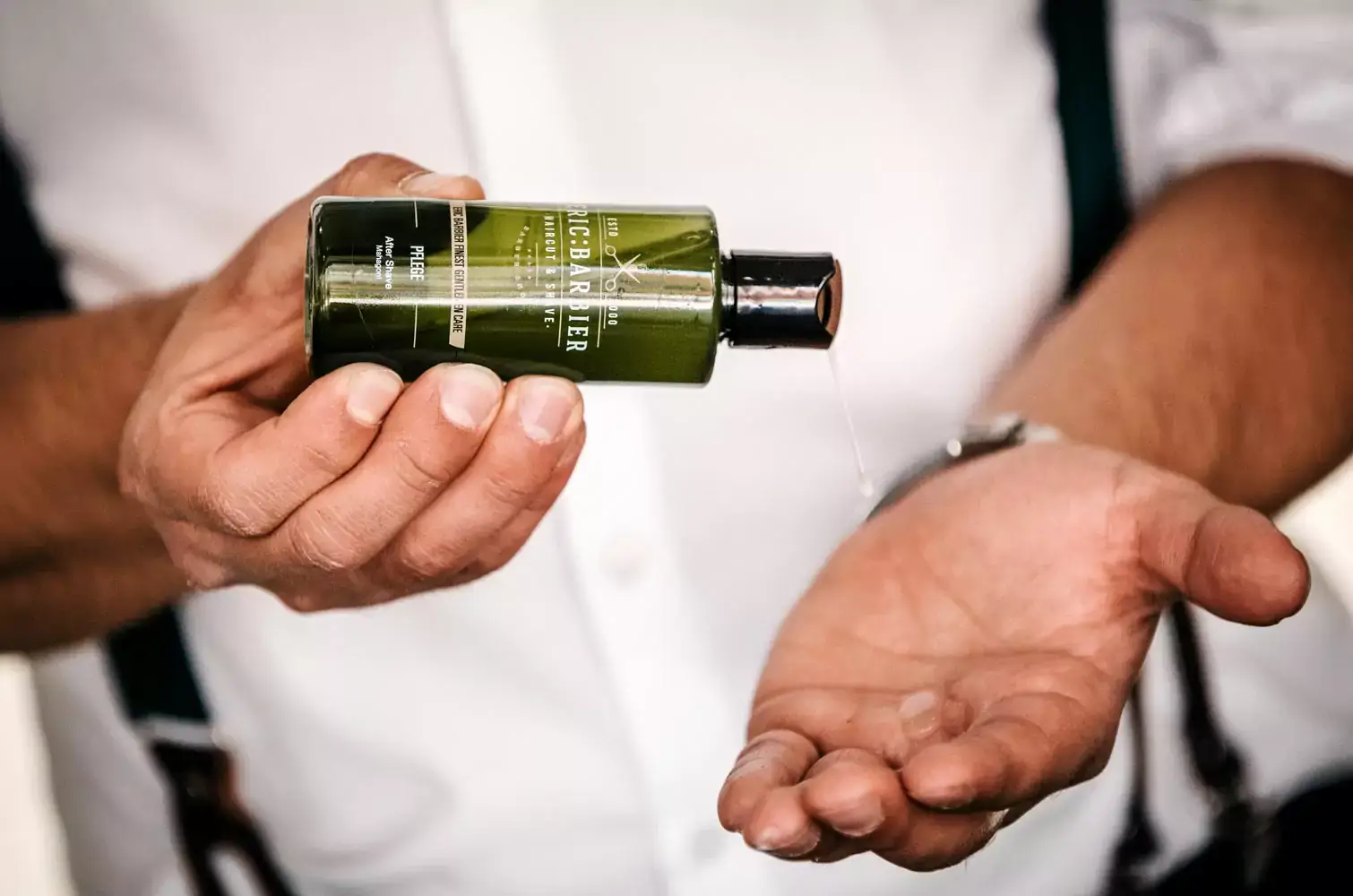
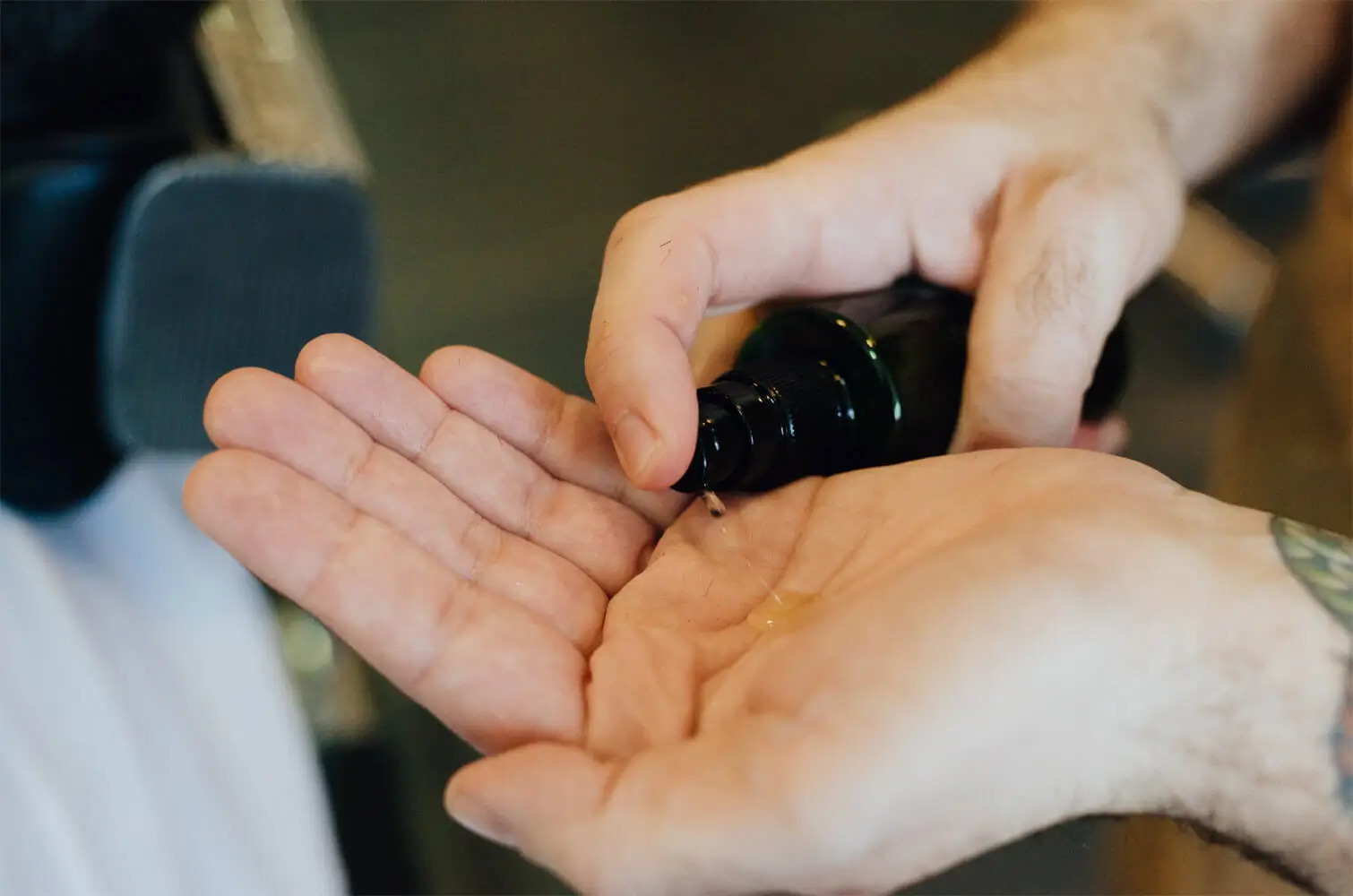
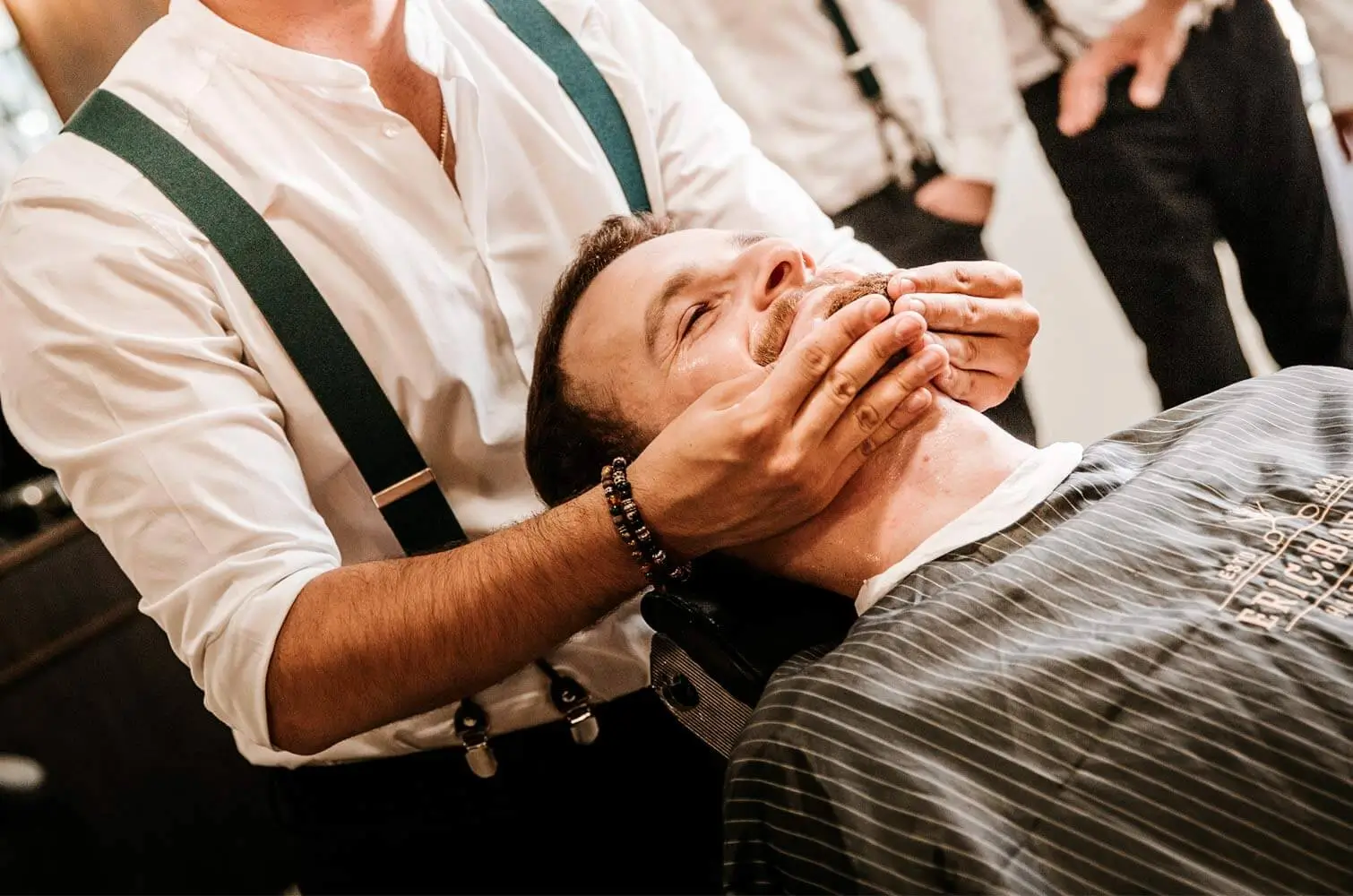
It’s dead simple to use: after shaving, wash off any remaining shaving foam and close the skin pores with cold water. Then apply the aftershave to skin that’s still slightly damp – don’t forget to shake the bottle first, as the heavier active ingredients settle at the bottom. Often, a pea-sized amount is enough; rub it briefly between your palms and then massage it in carefully. Thanks to its moisturising properties, you can also apply it to your face and – if there’s any left over – to your beard.
A difficult birth
It took us almost three years to find the right formula for our aftershave. Time and again, little details weren’t quite right: sometimes it was too acidic and made the skin feel tight, then again it lacked a bit of acidity – it drove me mad! But our customers gave us fantastic support during the development process; time and again we were able to try out the new blends on them and received honest feedback straight away. I was then able to pass this feedback on to Haircompany in Boden in the Odenwald. We developed our skincare and styling range with this family-run business – I can’t even remember how many times I received post with new samples. Because one thing is particularly important to me: only when I am completely convinced by a product do we stock it in our shop and use it in our daily work.
Haven’t tried our aftershave yet? On your next visit to our salons, I’d be happy to show you how a good aftershave can work without stinging, and explain more about the natural ingredients and the manufacturing process.
Yours, Anthony
What you need for this
Personal advice at the barbershop
Our barbers in Hamburg are happy to advise you personally – whether it's beard care, shaving or the right styling.