Vasectomy - more than just hot air
· Updated: · 5 min read
Many men find it difficult to talk about sterilisation. Master barber Anthony underwent the safe procedure this summer – and has had to dispel many myths ever since: is the entire scrotum removed, for example? And what happens to the sperm? We spoke to urologist Dr Sascha Wilken about the misconceptions and benefits of vasectomy for men.

“Do you have a hormone problem now?” Hardly any other question has been asked of Anthony more often since he had the vasectomy. He broaches the subject openly with friends and customers – and is literally bombarded with questions. From unbalanced hormone levels to hot air during ejaculation and even sperm congestion – many men know alarmingly little about this method of contraception. As if, alongside a tiny section of the vas deferens, they were also leaving behind their entire masculinity, the majority shy away from delving deeper into the subject.
“You’ll die of a blocked vas deferens and end up with ram’s testicles”
Dr Sascha Wilken has heard all these prejudices ad nauseam. From the lack of orgasm to a permanently flaccid penis, he relieves men of these unfounded worries on a daily basis. “Some patients are completely uninformed and come in with no background knowledge whatsoever, whilst others are well-informed. There is a veritable flood of information, particularly on the internet, much of which is untrue,” says the doctor. First things first: don’t panic. Sex after a vasectomy still works just as it did before.
The penis still becomes erect, and ejaculation still occurs – essentially a release of fluid, just without sperm. In men, the fluid released consists of only a minimal proportion of spermatozoa anyway; “the rest is essentially an accompanying secretion produced, amongst other places, in the prostate,” explains Dr Wilken. As in the original state, the testicles continue to produce sperm, which the body gradually ‘recycles’. The doctor regularly finds that, once this question has been answered, patients breathe a sigh of relief during the consultation. As part of the mandatory pre-operative appointment, men are informed about the procedure, possible risks and side effects, as well as follow-up checks; a physical examination is also carried out.
With Kurt Cobain in the operating theatre
About two weeks later, things get serious. During the outpatient operation, patients are given a local anaesthetic injected into the scrotum – the perfect moment for the boss of Eric:Barbier to switch from formal to informal address with Dr Wilken – or as Anthony puts it: “When else does someone get that close to you?” The master barber’s choice of music causes a collective nodding of heads as Nirvana plays in the operating theatre.
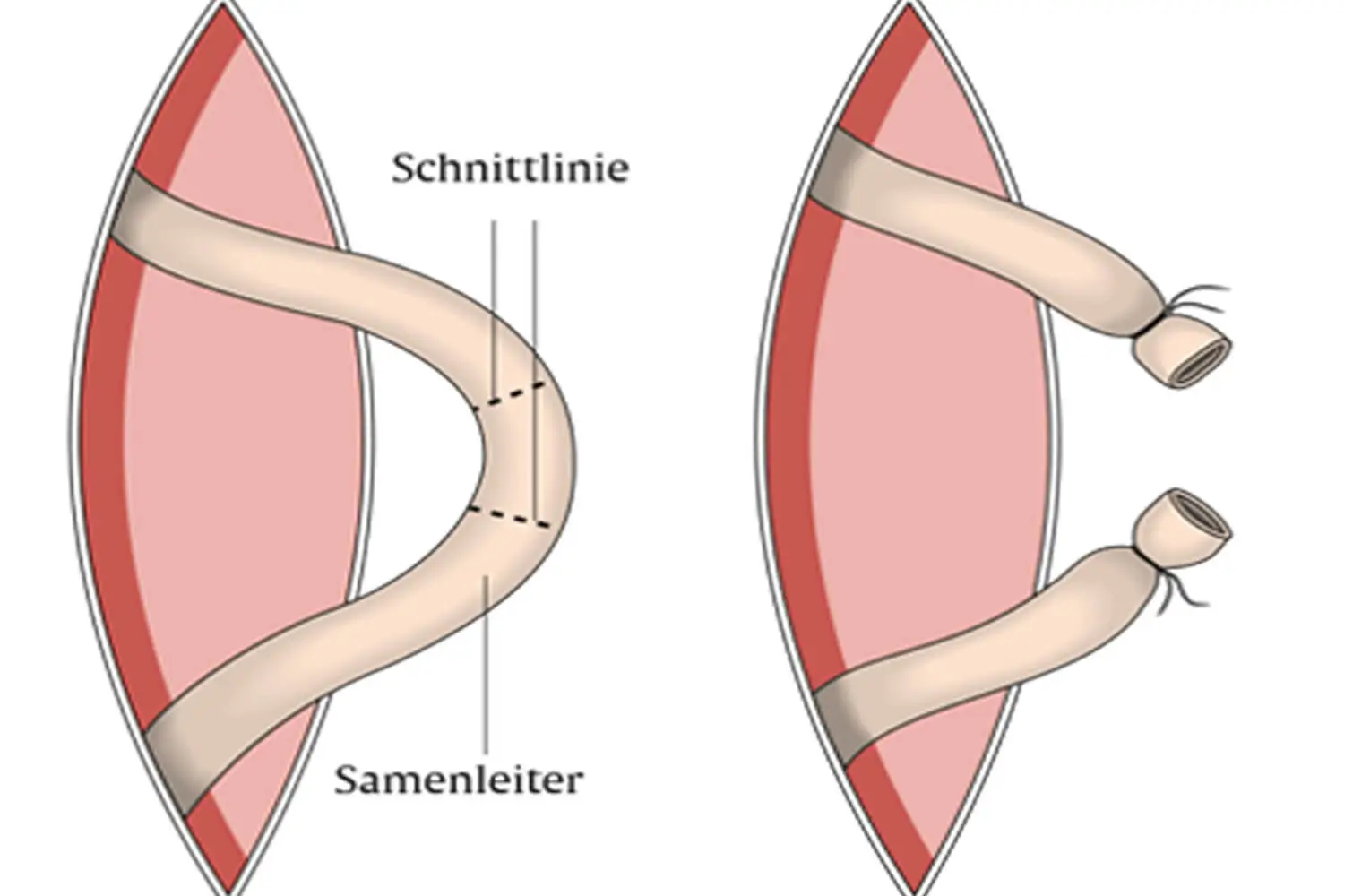
During the procedure, Dr Wilken makes an incision about one centimetre long in the scrotum, which will later disappear into the folds of skin. Through the small opening, he reaches the right and left vas deferens, which are severed. In painstaking precision work, the surgeon also removes a small section from each before sealing, folding over and tying the ends. The doctor takes these four safety precautions during every male vasectomy – better safe than sorry. Pain? None whatsoever. “I didn’t feel a thing and even kept sending my wife photos,” says Anthony. After the successful operation, he was allowed to go home and was advised to take it easy, as there is a risk of post-operative bleeding for the first couple of days.
A bit of soreness in the groin
“The day after the operation, we see patients for a follow-up check-up, during which we carry out an ultrasound scan and a physical examination. Many initially notice a certain feeling of pressure, but this is quite normal as wound fluid collects,” says Dr Wilken. This accompanying discomfort often radiates into the groin like muscle ache, though it can sometimes feel like a kick to the groin. However, this subsides after a few days. If, however, the scrotum changes colour or swells significantly, a return visit to the doctor is advisable.
Immediately after the procedure, a man is still fertile, as the last sperm are located in the upper sections of the vas deferens. “You need to have at least 20 ejaculations to properly clear the anatomical passages – I always compare it to a drain cleaner. It doesn’t matter how these orgasms are achieved – whether through sexual intercourse or masturbation,” explains the urologist. Once the minimum number has been reached, the success of the operation is confirmed by two semen analyses. Only when no sperm are found in the samples is the man considered sterile.
A life-changing decision
“I have four children with my wife; our family planning is complete. Besides, I didn’t want her to have to take hormones for contraception,” says Anthony, explaining his reasons for taking this step. Moreover, male sterilisation is considerably easier to perform than a comparable procedure on a woman’s body. It is an argument the specialist hears frequently: “Well over 90 per cent of the patients who come to us are determined to go ahead with the procedure,” he reports. However, a few men do reconsider their decision after the initial consultation.
“A vasectomy is a drastic decision for a man, as family planning is subsequently only possible through indirect means,” says Dr Wilken. Whilst the operation itself is “not particularly difficult”, restoring fertility is immensely more complicated – and expensive. Whilst severing the vas deferens costs between 450 and 700 euros, the “reversal” costs between 3,000 and 5,000 euros. Alternatively, there is artificial insemination, for which sperm is extracted via a testicular biopsy.
We believe: it is time to talk openly about this issue and dispel the many misconceptions. Contraception in a relationship is always a matter for both partners – a real man should not be ashamed of supporting his wife.