
Men like it spicy
· Updated: · 5 min read
THREE CHEF'S KNIFE TIPS FOR THE KITCHEN
When it comes to cooking, knives play a crucial role. With the right tools, ingredients can be prepared to perfection and finished dishes served with style. But which ones do you need in the kitchen? Here are some chef’s knife tips from the experts!
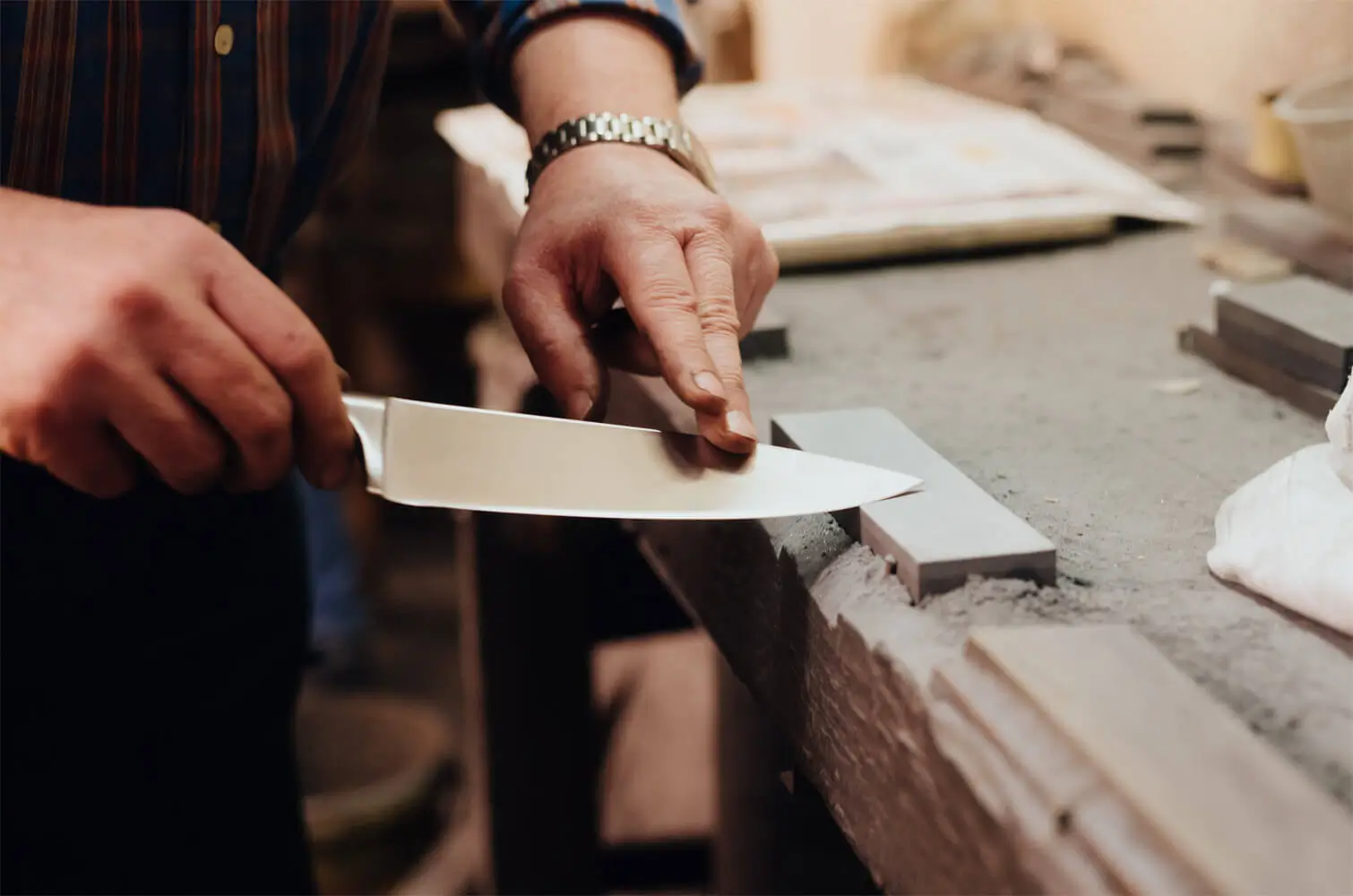
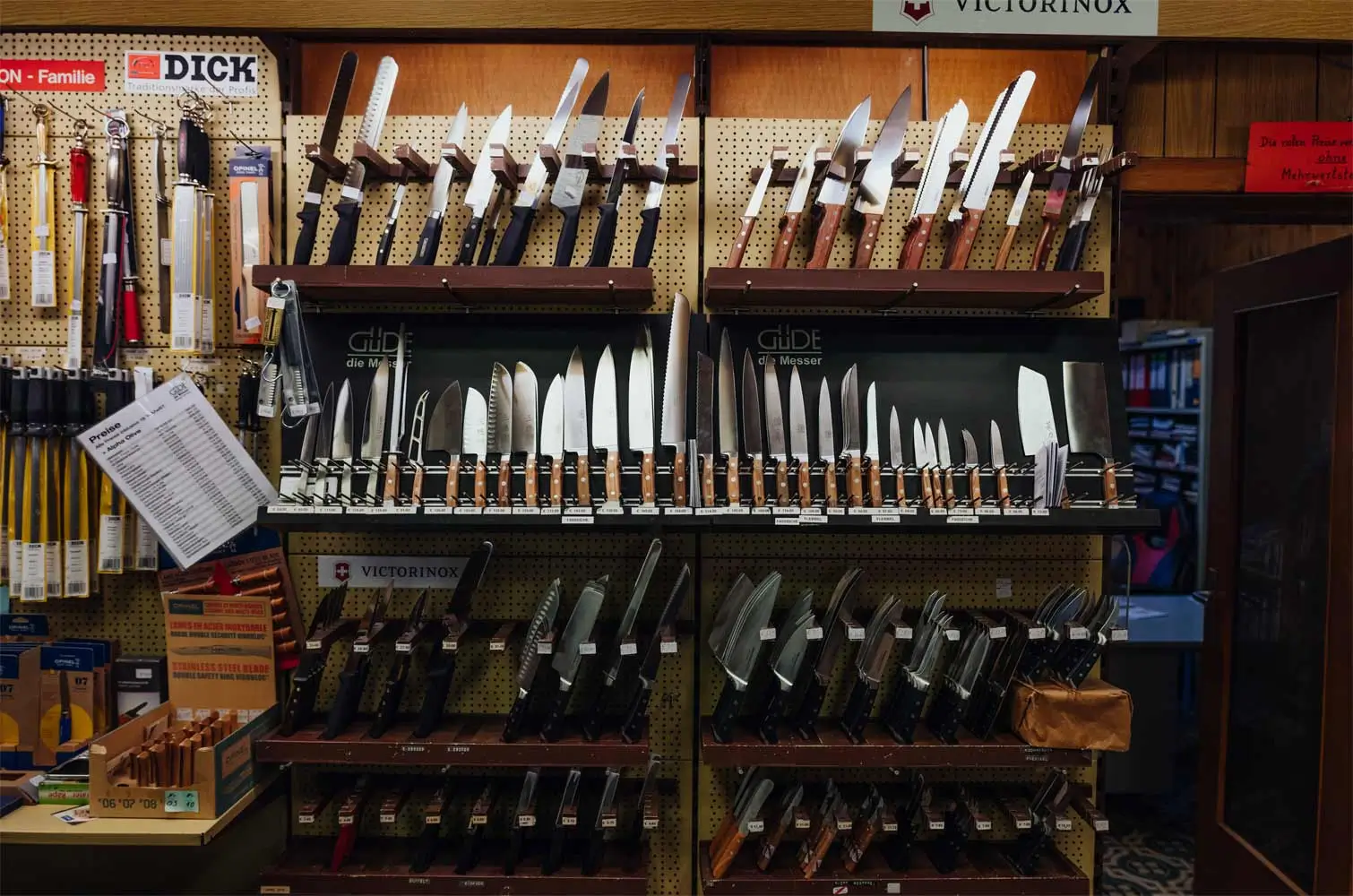
The choice is vast. From paring knives and Santoku knives to cleavers, a wide range is available online and in specialist shops. So, given this overwhelming array of options, does it all boil down to buying an expensive knife block? Not necessarily: “There are three fundamentally important knives,” says Friedrich Jürges. He should know: For 100 years, the name has been synonymous with quality in the Schanzenviertel; he is the third generation to run the family’s knife-sharpening business and its adjoining specialist shop. Many chefs shop here, and aspiring chef apprentices often visit the premises to equip themselves with the right tools for their training. According to ‘Messer-Jürges’, these three models are essential in any kitchen:

The all-rounder: the chef’s knife
“The so-called chef’s or utility knife is the most important of the three knives,” says Friedrich Jürges. No wonder, as this tool – also known as the chef’s knife – is a true all-rounder. With its blade measuring around 20 centimetres, it can be used to prepare a wide variety of foods. The tip of the blade is particularly suitable for small cutting tasks such as chopping onions and garlic or removing the stalk from a tomato. Professionals use the front section of the blade to fillet fish and meat or chop fresh herbs, whilst the section behind it is ideal for cutting particularly hard foods. Shellfish shells, on the other hand, can be cracked open using the blunt back of the blade. When cutting, never use the full length of the blade; instead, guide the knife through the ingredients in a circular motion. This allows for precise results without much effort, though it does require a bit of practice.
Not for theorists: the paring knife
Small but mighty: with an average blade length of six to eight centimetres, the paring knife is particularly suitable for smaller ‘chopping tasks’ such as peeling tomatoes, chopping fruit or garnishing dishes. Thanks to its high hardness, it offers precise cutting and is equally useful for chopping onions and mushrooms as it is for trimming tendons from roasts, skinning poultry and scaling fish. If you fancy it, you can also use the hard paring knife to crack open quail’s eggs without any trouble, without shattering the shell into countless tiny pieces. “Incidentally, the name comes from Latin and not from ‘office’, as many believe,” explains Friedrich Jürges. “Officium” roughly translates as a favour or a service rendered in friendship – no wonder that even the monks, who were well-versed in Latin, did not want to do without the friendly assistance of our second chef’s knife recommendation in the monastery kitchens.
Serving time: the carving knife
After all the preparation, cooking, frying, braising, simmering or grilling, it’s time for the grand entrance: a carving knife is used specifically to carve meat dishes. This elegant procedure is made possible by the nature of the blade, which is 15 to 30 centimetres long and extremely sharp, up to three centimetres thick at its widest point and tapering to a point at the front. Thanks to the smooth surface, the meat does not stick during cutting but slides off easily. This prevents the meat from shredding, the juices do not escape, and the structure is preserved as much as possible. The carving knife is also suitable for serving fish, vegetables or fruit. However, the opening of the buffet or a shared meal only looks truly professional when combined with the double-pronged carving fork, which prevents the dishes from slipping whilst being cut. But take care when cutting: the slices of meat should never be less than one centimetre wide. Otherwise, you’re no longer talking about so-called ‘carves’, but cold cuts – and the host looks rather stingy.
Cutting-edge experiences
As always, the same applies to chef’s knife tips: quality comes at a price. Each type is available in various materials, from stainless and carbon to Damascus steel, and each has its own advantages and disadvantages. It’s best to seek advice from a specialist retailer based on your own preferences and requirements. Friedrich Jürges advises spending between 30 and 80 euros, “then you’ll have a knife you can pass down to future generations.” A quality product can be sharpened up to ten times, but it should be professionally serviced every four years. After use and proper cleaning, knives must be regularly maintained with a whetstone or sharpening steel to prevent them from becoming blunt. It’s an effort that pays off – after all, according to a study, over half of all women find men who can cook well attractive…