Audiophile pleasure from Hamburg - Part 1
· Updated: · 4 min read
Surrounded by shipping containers and industrial firms, Thomas Carstensen ensures the sound is just right on the Elbe island of Veddel: with his company, he manufactures the unrivalled, high-quality Inklang loudspeakers for music lovers, modelled on the automotive industry. Yet until a few years ago, this North German was making a career in the financial sector – until he swapped his job for his passion. A bold move.
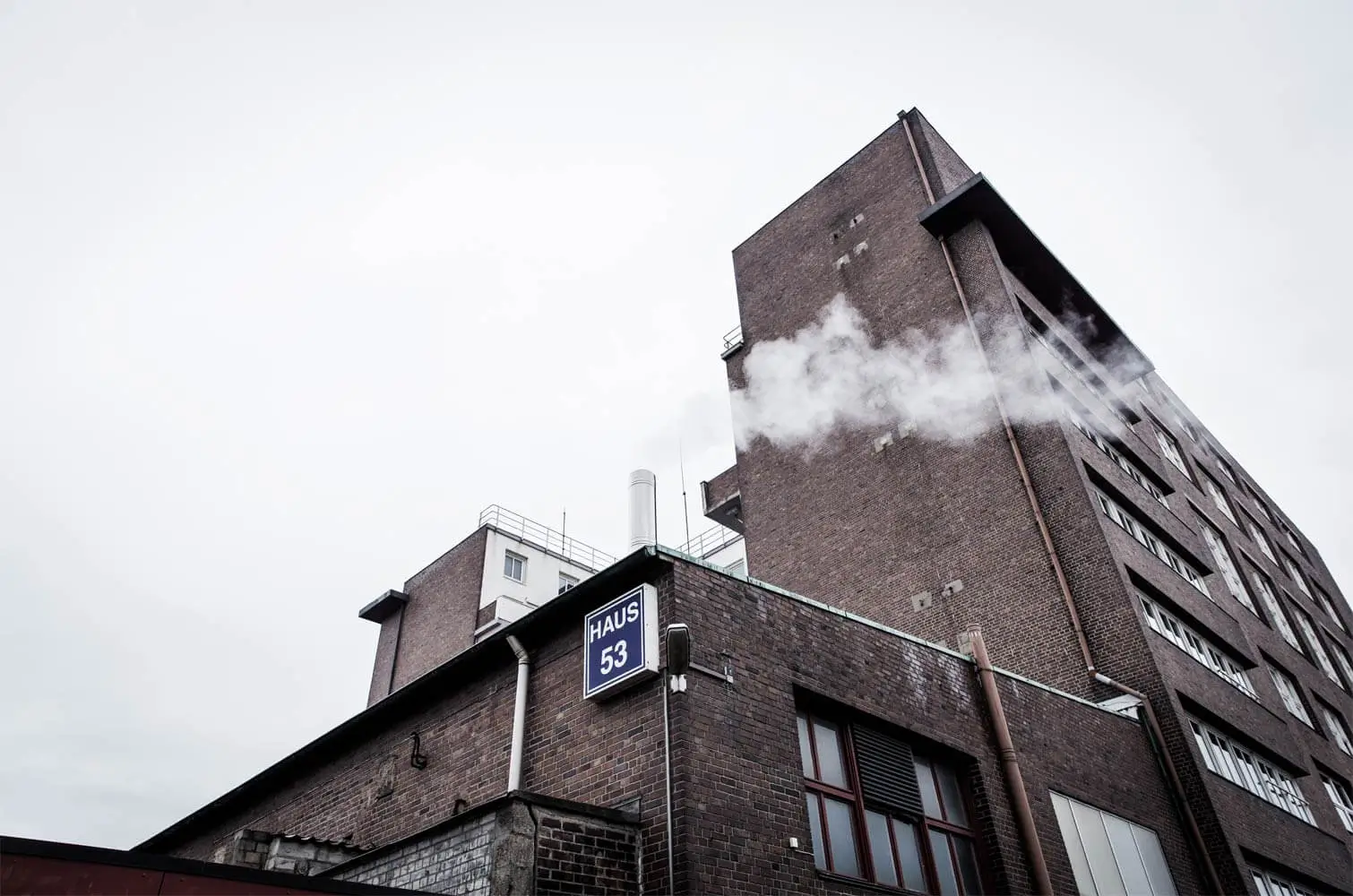
If you’re looking for Inklang, you’ll search in vain in Hamburg’s chic neighbourhoods. Instead, the route takes you along makeshift roads to the industrial district of Veddel. Surrounded by smoking chimneys and towering stacks of containers, all Inklang loudspeakers are assembled here in an old brick building. “If it weren’t for all those containers, you could see the Elbe straight away. That would be even nicer,” says Thomas by way of greeting.
“The speakers are like espresso”
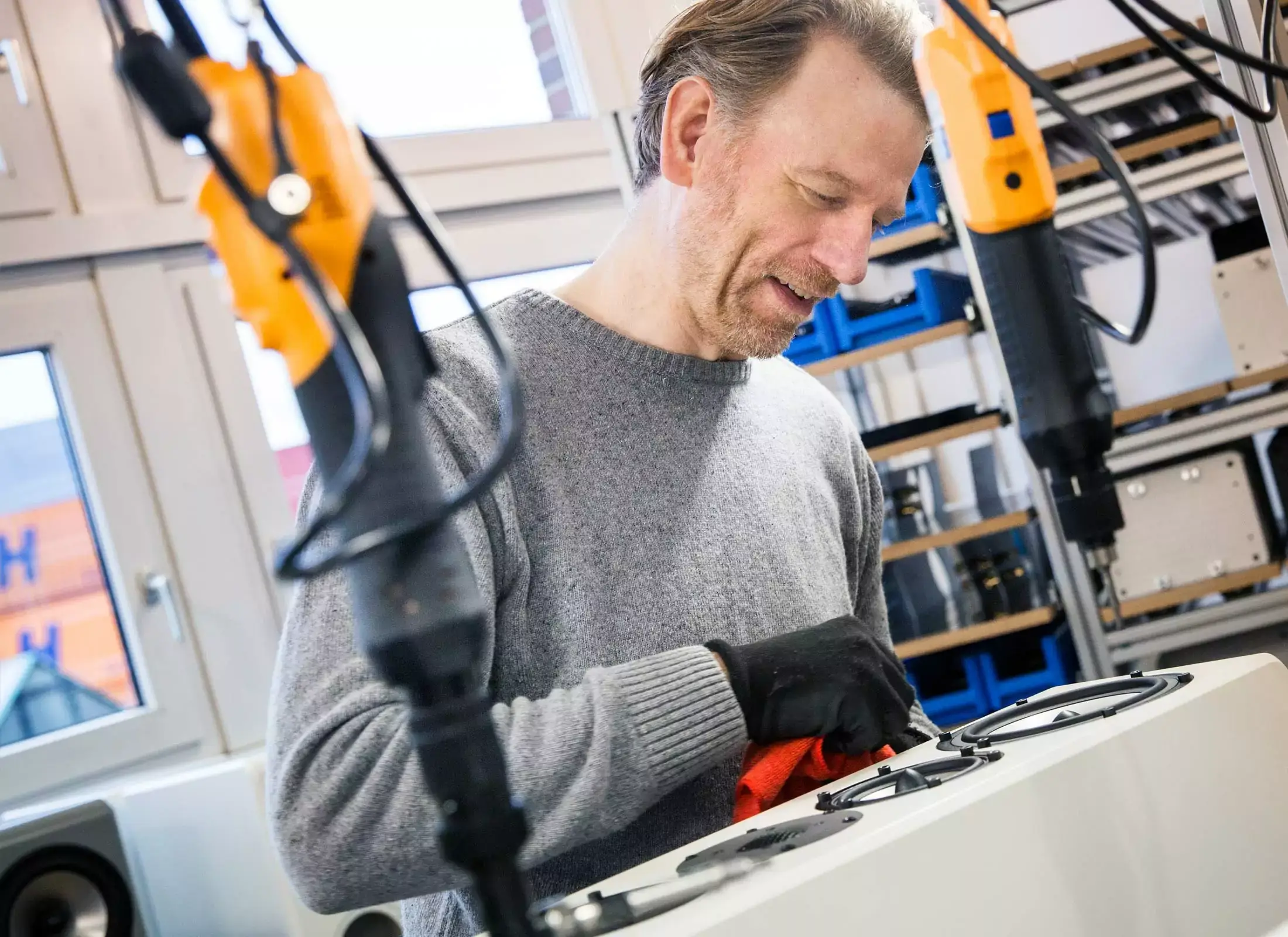
What’s particularly lovely here are the finished Inklang speakers, lined up in rows in the 300-square-metre workshop, waiting to be shipped out. With their understated lines and colour scheme, they exude a soothing sense of understatement. The smooth jazz web radio enhances the atmosphere in what is probably Hamburg’s quietest workshop with its gentle sounds. Whilst containers are being stacked with a clatter outside the door, Thomas assembles the individual parts with kid gloves. It only gets louder when the espresso machine fills a small cup once again. “Just three a day, that’s all I can manage,” he laughs, lifting the right corner of his mouth before turning serious again: “But good espresso, very good indeed. It’s like with the speakers: it doesn’t have to be much, but it has to be perfect.”
The fact that the man with the three-day stubble and his hair neatly slicked back now builds these exclusive audio systems is down to his school days in Flensburg. He made his first one in tech class when he was twelve. From then on, this passion was to stay with him, even if not professionally. As a way to unwind from his stressful daily life – at the turn of the millennium, the trained banker took a job at a private bank in Hamburg – he built numerous speakers for friends and acquaintances in his spare time, constantly tinkering away at the perfect sound. “It was never in large numbers; I built three or four pairs a year – without any pressure and always depending on how much time I had,” he recalls of the early days.
A bicycle instead of a saloon car
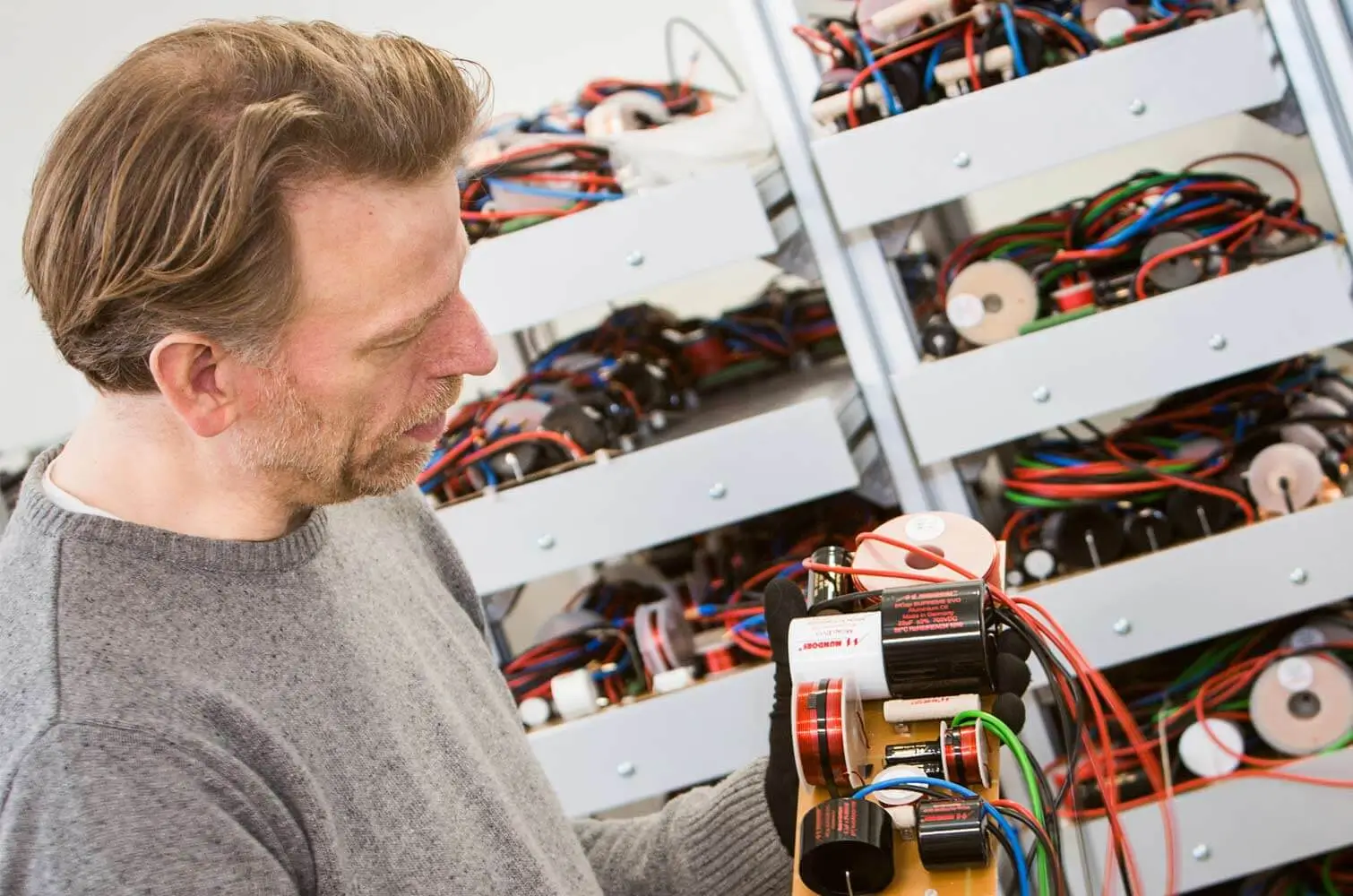
Thomas’s passion for music was instilled in him from an early age by his father, who often picked up the guitar. His own tentative attempts at playing the piano, however, came to an abrupt end due to a lack of discipline when it came to memorising the notes. So, in his hobby room, he concentrated on reproducing the sound of professional artists as faithfully as possible, whilst professionally there was only one direction on the career ladder: always upwards. After his role at the private bank, he moved to a life insurance company and finally into asset management, where he served as managing director for four years.
An impressive career that also paid off financially: “I drove an Audi A7, had 15 staff and a good salary,” as Thomas says today. Then the financial crisis struck in 2008 and 2009. The atmosphere in the company became increasingly tense, the pressure mounted, and interpersonal relations suffered noticeably. “At some point, I just didn’t feel like it anymore,” he recalls – and made the decision to swap his hobby for his profession. In 2013, the star consultant bid farewell to the crisis-ridden financial sector; from then on, it was a bicycle instead of a saloon car and entrepreneurial risk instead of financial security.
But it takes a long time before the new business idea is more than just a bold notion. In developing the concept, the sharp-eyed northerner draws on his professional experience: first, Thomas focuses on the sales aspects, seeking out the right niche and the distinguishing feature that sets the company apart from other manufacturers on the market – and finds it in the automotive industry. Inklang pioneers the build-to-order principle, whereby products are custom-made to the customer’s specifications. From the colour to special spikes on the feet, different cable covers and even a connection terminal engraved with the owner’s name, a wide range of customisation options is offered.
Read the second part to find out why Thomas’s dream almost came to an abrupt end, why he will never forget a Hamburg pharmacist, and what role professional musicians play in the Inklang speakers.